
SECURITY ARCHITECTURE & DESIGN: BUILDING RESILIENT BLUEPRINTS FOR DIGITAL AGILITY
Introduction: The End of the "M&M" Security Model
For decades, enterprise security followed the “M&M” model: a hard, crunchy perimeter shell protecting a soft, chewy interior. In the age of hybrid work, multi-cloud ecosystems, and ubiquitous APIs, that shell has effectively dissolved. Deploying security tools in isolation—without a cohesive architectural vision creates “complexity debt” that attackers easily exploit. Security Architecture & Design is the discipline of engineering a resilient digital foundation, ensuring that every layer of the technology stack is secure by design, not by accident.
What This Service Means in Modern Context
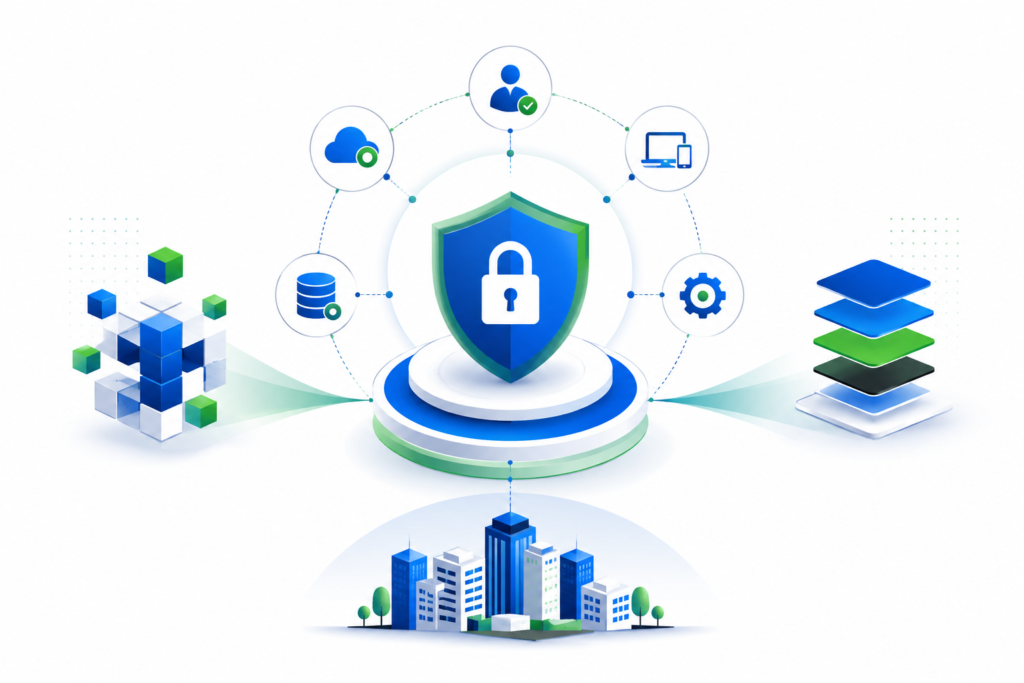
Within the VirtualCISO framework, Security Architecture & Design represents Structural Integrity. It is the process of moving from “buying tools” to “engineering ecosystems.” Modern architecture prioritizes the flow of data and identity rather than static network boundaries. It means adopting a “Zero Trust” mindset where every access request is verified, regardless of origin. We act as the bridge between business requirements and technical implementation, ensuring that security enables digital transformation rather than acting as its bottleneck
Key Components / Capabilities
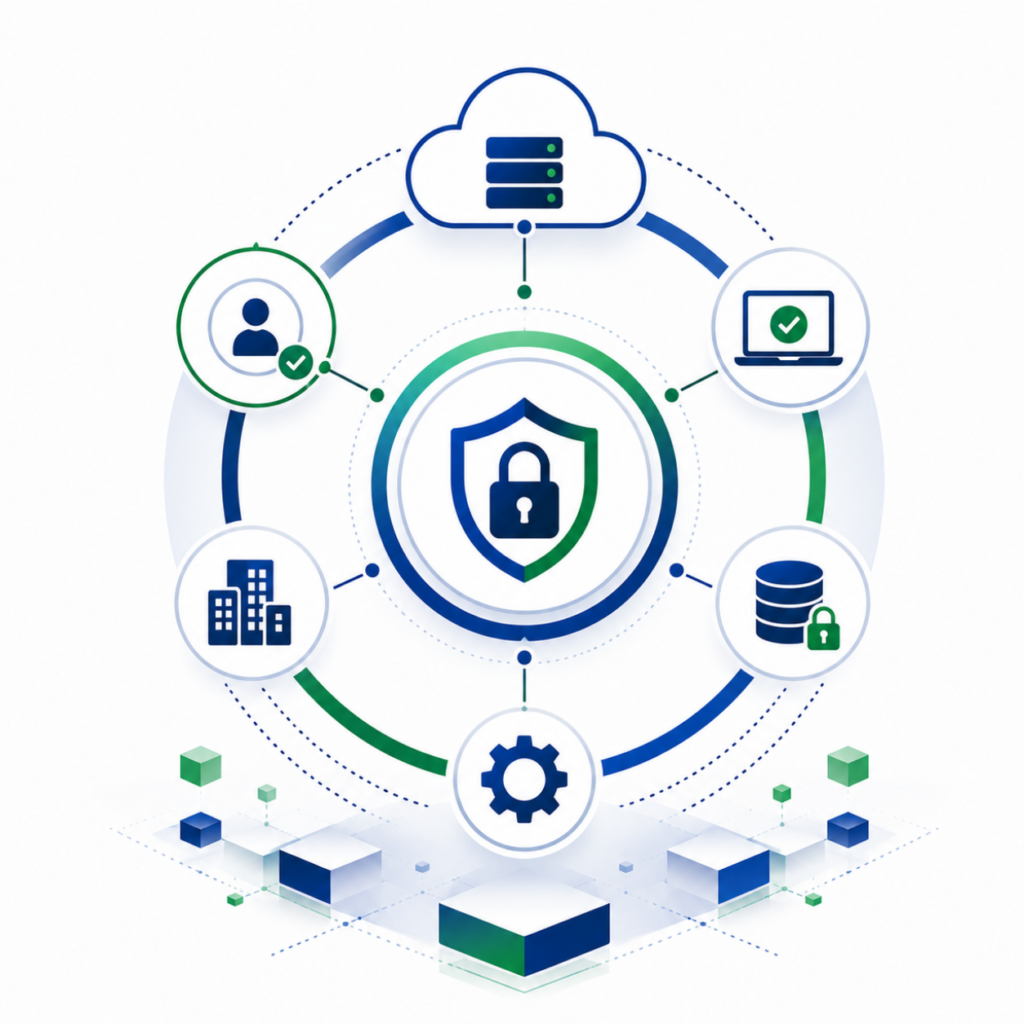
A high-performance security architecture is built upon five foundational pillars:
- Zero Trust Architecture (ZTA): Moving security from network-centric to identity-centric, ensuring "never trust, always verify" logic.
- Cloud-Native Design: Engineering security controls specifically for AWS, Azure, and GCP environments, utilizing micro-segmentation and serverless security.
- Identity & Access Management (IAM) Strategy: Establishing a robust identity fabric as the primary security perimeter for remote work and SaaS applications.
- Infrastructure as Code (IaC) Security: Integrating security guardrails directly into the deployment pipelines to prevent misconfigurations before they reach production.
- Defense-in-Depth Engineering: Layering multiple, independent security controls (Network, Host, Application, Data) to ensure that a failure in one does not result in a total compromise.
How It Works (Process-Level Explanation)
- nalyzing the organization’s digital footprint, business processes, and future growth plans to define architectural goals.
Phase 1:
Business Discovery & Requirements A
Phase 2
Threat Modeling & Risk Mapping:
Identifying the likely attack vectors for your specific environment and mapping them to architectural countermeasures.
Phase 3
Conceptual & Logical Design:
Developing the high-level blueprints and data-flow diagrams that define how users, devices, and applications interact securely.
Phase 4
Technology Selection & Interoperability
- Utilizing “Purple Teaming” and breach simulations to verify the architecture’s resilience and tuning it as new threats emerge.
Phase 5
Validation & Continuous Optimization
Establishing the metrics and steering committees required to ensure the roadmap remains relevant as the threat landscape changes.
Business Value & Use Cases
v
Reduced Complexity & Cost
Consolidating redundant security tools into a streamlined architecture, lowering licensing and training overhead.
Accelerated Innovation
Allowing developers to ship products faster by providing “pre-approved” secure architectural patterns.
Lowered Breach Impact
Ensuring that if an attacker gains entry, they are contained within a single segment, preventing catastrophic lateral movement.
Investment Longevity
Designing an advanced security architecture that is flexible enough to accommodate future technologies like AI and Edge computing.
How to Evaluate Vendors / Solutions
When selecting an advisory partner for Security Architecture & Design, CISOs should evaluate:
Vendor Agnosticism:
Does the advisor recommend tools because of a "partnership kickback" or because they fit your unique technical requirements?
Cloud & Hybrid Maturity
Do they have proven expertise in complex multi-cloud and containerized environments (Kubernetes/Docker)?
Methodology Rigor
Do they use recognized frameworks like NIST CSF or SABSA, or is their approach ad-hoc?
Identity-First Mindset
Do they prioritize Identity and Data protection over legacy network hardware?
Hands-on Design Depth
Can they provide actual low-level design (LLD) diagrams and configuration standards, or just high-level "slide-ware
Common Challenges & Pitfalls
The "Legacy Anchor" Trap
Attempting to force modern cloud workloads into legacy on-premise security architectures.

Complexity Overload
Designing a “perfect” architecture that is so complex it cannot be managed or maintained by the existing internal team.
gnoring the User Experience
Engineering security controls that are so intrusive they force employees to find “shadow IT” workarounds.
Designing in a Silo
Failing to involve the Cloud, DevOps, and Infrastructure teams in the architectural design process.
Maturity Model / Best Practices
01
Level 1 (Traditional)
Network-centric security; reliance on firewalls and VPNs; siloed point products with no integration.
02
Level 2 (Evolving)
Initial cloud adoption; basic IAM integration; some use of network micro-segmentation.
03
Level 3 (Proactive):
Zero Trust principles active; central identity provider; automated security guardrails in CI/CD pipelines.
04
Level 4 (Resilient)
Identity-centric and data-centric architecture; full multi-cloud interoperability; continuous security validation and “Self-Healing” infrastructure.
How It Fits Into
Broader SOC Strategy
Security Architecture is the “Chassis” of the SOC. It provides the high-fidelity telemetry that threat monitoring and detection services rely on. A well-designed architecture reduces the “noise” reaching the SOC by preventing commodity attacks at the edge, allowing analysts to focus on sophisticated threats.
Advisory Note
VirtualCISO acts as your strategic design lead. We do not sell hardware or software; instead, we provide the vCISO expertise to blueprint your security ecosystem, audit your design choices, and ensure your technology stack is engineered for long-term resilience. We turn security from a series of products into a unified defensive strategy.
We ensure your strategy belongs to you, not your vendors.
Conclusion: The Future of Strategic Defense
The future of architecture is “Autonomous & Software-Defined.” As digital perimeters disappear, security will be baked into the code and the identity of every request. Organizations that master the transition from legacy hardware to agile, design-first architecture today will be the ones that can innovate at the speed of business tomorrow.