
Security Tooling Oversight
Ensure every cybersecurity tool delivers measurable risk reduction,
compliance alignment, and business value.
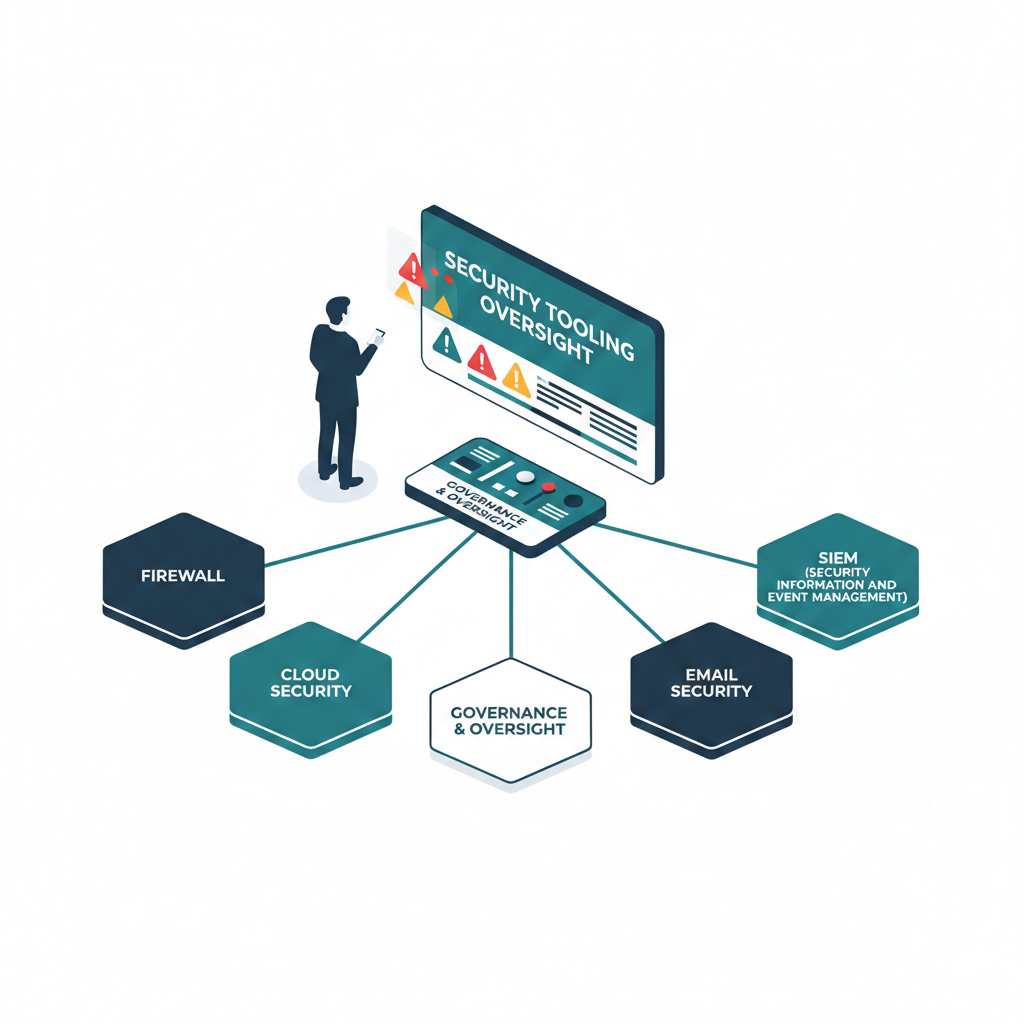
When Cybersecurity Spending Lacks Visibility and Accountability
Organizations often invest significantly in cybersecurity but lack clarity on which risks are being reduced and how spending supports business priorities.
Siloed and Reactive Spending Decisions
Security purchases are frequently driven by audits, incidents, or vendor influence rather than a unified risk strategy. This results in overlapping tools, wasted budget, and controls that do not align with actual threat exposure.
Lack of Ownership and Accountability
When responsibility for security outcomes is unclear, tools are underutilized, alerts go unaddressed, and control effectiveness degrades over time despite ongoing investment.
Get Control of Your Cybersecurity Tools Before They Control Your Budget
Understand what’s working, what’s redundant, and what actually reduces risk.
Why Security Tooling Oversight Is a Leadership Priority
Rising cybersecurity spend with limited measurable outcomes
Organizations continue to invest in new cybersecurity tools to address evolving threats, regulatory pressure, and audit requirements. However, without structured oversight, leadership often lacks clarity on whether these investments are delivering meaningful risk reduction.
Tool sprawl creating blind spots and inefficiencies
As new tools are added over time, overlapping technologies and unused capabilities become common. Tool sprawl increases operational complexity, creates visibility gaps, and reduces the effectiveness of security operations.
Regulatory accountability across UAE & African jurisdictions
Regulators across the UAE and Africa increasingly expect organizations to demonstrate accountability for security controls. It is no longer sufficient to simply deploy tools organizations must show that controls are governed, monitored, and effective.
Board and audit expectations for control effectiveness
Boards and auditors demand evidence that cybersecurity controls are working as intended. Leadership must be able to demonstrate how tools align to risks, policies, and compliance requirements, supported by clear documentation and reporting.
Lack of ownership over security technology decisions
Without defined governance, security tools are often implemented without clear ownership or decision authority. Security Tooling Oversight establishes accountability, ensuring every tool has a defined purpose, owner, and measurable business outcome.
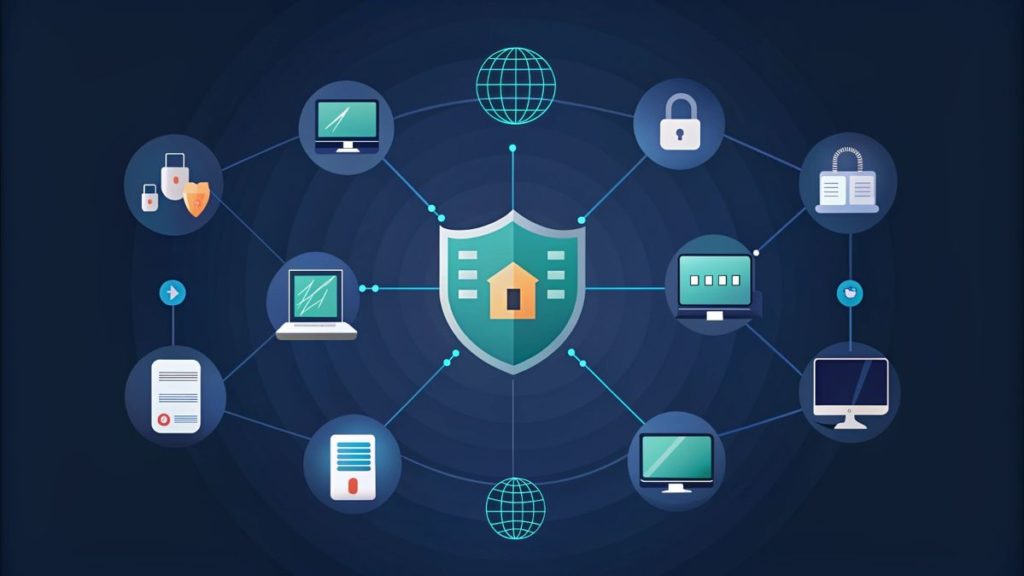
What Security Tooling Oversight Covers
Security Stack Visibility and Inventory
Security Tooling Oversight begins with establishing complete visibility into the organization’s security stack. This includes identifying every deployed security tool across cloud, network, endpoint, and application environments.
Governance, Policies and Accountability
Effective oversight requires clear decision-making structures. This includes defining ownership for every security tool, establishing approval and lifecycle processes, and ensuring accountability for performance and outcomes.
Tool Effectiveness and Risk Alignment
Tools are assessed against the current threat landscape, business priorities, and defined risk appetite, ensuring technology investments directly support organizational objectives rather than operating in isolation.
Audit and Compliance Readiness
Security Tooling Oversight delivers evidence-backed documentation, mapping tools and controls to relevant frameworks and regulatory expectations, enabling confident audit and compliance discussions.
Our Core Service Matrix
Advisory Only
Independent guidance on existing security tools, effectiveness, and governance without vendor involvement.
Advisory + Vendor Evaluation
Objective assessment of vendors and solutions to support informed, risk-aligned security purchasing decisions.
Full Lifecycle Oversight
End-to-end governance covering tool selection, deployment oversight, performance measurement, and ROI tracking.
How We Approach Security Tooling Oversight
Discovery & Security Tool Assessment
We review all deployed tools across environments, assess their intended purpose, ownership, and integration points, and identify how they are currently managed.
Risk & Business Impact Mapping
Security tools are then mapped to actual business risks rather than technical functions. We evaluate how each tool supports the organization’s threat landscape, operational priorities, and risk appetite.
Governance & Control Alignment
We align security tools with internal policies, defined control objectives, and regulatory expectations. Ownership, decision rights, and lifecycle management are clearly established, ensuring accountability and consistent control operation across the organization
Executive Reporting & Dashboards
Leadership requires clear, actionable insight not technical noise. We translate tooling performance into executive-level reporting and dashboards that highlight risk reduction, control effectiveness, compliance status, and investment efficiency.
Continuous Oversight & Optimization
Security tooling oversight is not a one-time exercise. Through ongoing vCISO engagement, we continuously review tool performance, emerging risks, regulatory changes, and business evolution.
Why Choose Us for Security Tooling Oversight
Governance-first, not tool-vendor driven
Our approach is built on governance and accountability, not product promotion. We do not sell or resell security tools, which allows us to provide objective, unbiased oversight.
Aligned with UAE & African regulatory expectations
We align security tooling oversight with regional regulatory expectations, helping leadership demonstrate accountability, control effectiveness, and responsible risk management across multiple jurisdictions.
Framework-mapped oversight
Security tools are reviewed and governed in alignment with internationally recognized frameworks such as ISO, NIST, and CIS.
Executive-ready reporting & dashboards
Our reporting focuses on risk reduction, compliance posture, and investment efficiency, enabling leadership and boards to make informed decisions without needing to interpret technical detail.
Independent, business-aligned advisory
Our focus is on enabling informed decisions, strengthening governance, and ensuring cybersecurity tools support long-term business objectives rather than short-term technical fixes.Lorem ipsum dolor sit amet, consectetur adipiscing elit. Ut elit tellus, luctus nec ullamcorper mattis, pulvinar dapibus leo.

Turn Cybersecurity Tools Into Business Assets Not Cost Centers
Security Tooling Oversight ensures accountability, compliance, and ROI across your cybersecurity investments.
FAQs
Why is Security Tooling Oversight necessary if we already have security tools in place?
Having security tools does not automatically mean risks are being effectively managed. Security Tooling Oversight ensures tools are properly governed, aligned to business risk, and delivering measurable value rather than operating in isolation.
Will this service help reduce our cybersecurity costs?
Yes. By identifying overlapping tools, unused licenses, and underperforming technologies, organizations can rationalize their security stack and optimize spending without increasing exposure to risk.
Is Security Tooling Oversight only relevant for large enterprises?
No. This service is valuable for growing and mid-sized organizations as well, especially those experiencing rapid expansion, regulatory pressure, or increasing cybersecurity spend without clear visibility or control.
How does this support audits and regulatory compliance?
The service provides evidence-backed documentation, clear control mapping, and governance structures that help demonstrate accountability and control effectiveness during audits and regulatory assessments.
Do you recommend or sell specific security tools?
No. Our approach is completely independent and governance-led. We do not sell security products, ensuring all recommendations are objective, business-aligned, and free from vendor influence.
Is Security Tooling Oversight a one-time engagement or ongoing service?
It can be both. Organizations may engage for a one-time assessment or opt for continuous oversight through a vCISO model to ensure tools remain effective as risks, regulations, and business needs evolve.